
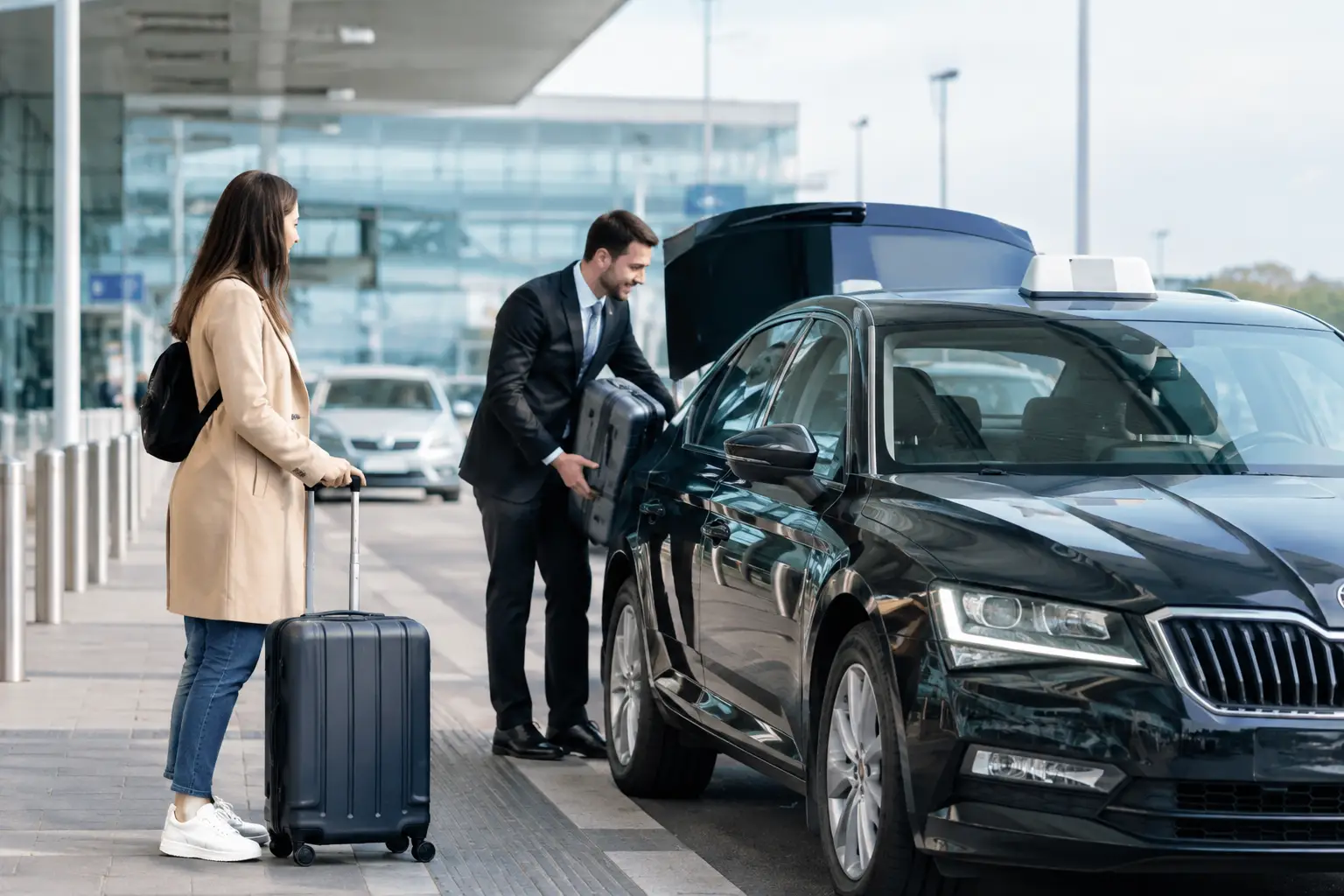
A suitcase on a driveway at 4.30am is not the moment to wonder, “do airport drivers help luggage?” For most pre-booked airport transfers, the answer is yes: a professional driver will normally help load your bags at pickup and unload them when you arrive at Heathrow. The sensible approach is to confirm your luggage requirements when booking, especially if you are travelling as a family, carrying bulky items or need a larger vehicle.
Do airport drivers help luggage on a pre-booked transfer?
A good airport transfer service is designed around the whole journey, not simply the drive. That means the driver should meet you at the agreed pickup point, open the boot, help place luggage safely inside and make sure it is secure before setting off. At the airport, they should unload your bags at the drop-off area so you can make your way into the terminal.
This is particularly helpful for early departures, when you may be managing children, pushchairs, hand luggage and the usual last-minute checks. It also matters after a long flight, when the last thing most passengers want is to wrestle several cases from a vehicle beside a busy terminal road.
There are practical limits. Drivers can assist with normal suitcases, cabin bags and reasonable personal items, but they cannot safely handle exceptionally heavy cases alone. If an item is awkward, oversized or needs two people to lift, tell the booking team beforehand. That gives the operator time to select a suitable vehicle and ensure the driver knows what to expect.
What luggage assistance usually includes
Luggage help should be simple and courteous. At a home, hotel or office pickup, the driver will generally take cases from the doorstep or agreed collection point to the vehicle. They may not be able to enter a property, carry bags up several flights of stairs or leave the vehicle unattended for long periods, particularly on a roadside pickup. These details depend on access, parking and safety.
At Heathrow, the driver will normally unload your luggage at the appropriate departure drop-off point. From there, airport staff, trolleys and terminal facilities take over. Drivers cannot usually accompany passengers into the terminal or take bags to check-in, as airport access and parking rules apply.
For arrivals, the arrangement can vary. If you have booked a meet-and-greet service, your driver may meet you in the arrivals area, then help take your bags to the vehicle once you have collected them. With a standard pickup, you may meet at an agreed collection point or car park. In both cases, clear instructions before landing remove unnecessary waiting and confusion.
The vehicle matters as much as the driver
The most common luggage problem is not a driver refusing to help. It is a car that is too small for the number of passengers and cases. A saloon may suit one or two passengers with standard luggage, but it can quickly become tight if you have large hard-shell cases, golf equipment, a pushchair or extra hand luggage.
Be honest about what you are taking. Count every case, including cabin bags that may need to travel in the boot. If you are uncertain, it is usually better to choose an estate car, people carrier or minibus rather than hope everything will fit. A little extra space makes loading easier, keeps the passenger area comfortable and avoids delays at collection time.
Families travelling from places such as High Wycombe, Amersham or Beaconsfield often benefit from booking a larger vehicle for this reason. Airport journeys tend to involve more than the usual amount of luggage, particularly during school holidays. A suitable vehicle lets the driver load bags properly instead of trying to balance cases around passengers.
Tell your airport taxi provider before the day of travel
A short note at booking can make a significant difference. Give the number of passengers, the number and approximate size of suitcases, and any items that need extra space. Mention pushchairs, wheelchairs, folding mobility aids, skis, musical instruments and sports bags. If you are carrying something fragile, say so as well.
You should also flag access issues at the pickup address. A narrow lane, steep drive, limited parking or several external steps may affect where the driver can stop and how easily luggage can be moved. Local drivers who know the Chilterns and South Buckinghamshire are used to village roads and less straightforward pickups, but advance information still helps them plan properly.
The same applies to the destination. If you are travelling to Heathrow, provide your airline and flight details where requested. This helps the service choose the right terminal and allows time to be planned around the journey. For an airport pickup, accurate flight information also supports flight monitoring and helps the driver adjust if your arrival time changes.
When extra assistance should be requested
Most passengers only need ordinary help with loading and unloading. However, it is worth asking about additional assistance if you are travelling with young children, have reduced mobility, are recovering from an injury or are arranging travel for an older relative.
A professional transfer company can advise on the most appropriate vehicle and pickup arrangement, but it is best not to leave this until the driver arrives. If a passenger needs more time to get settled, needs a walking aid stowed carefully or cannot manage bags from the front door, make that clear when reserving the journey.
For group travel, appointing one person to confirm the luggage count can also help. This avoids the familiar situation where everyone has packed “one small bag” and the driver is presented with ten cases, four backpacks and a folding buggy. Clear information protects the comfort and safety of everyone in the vehicle.
Tips for a smoother pickup and drop-off
Have bags packed and ready near the exit before the driver arrives. Labels with a mobile number are worthwhile, especially when several similar cases are travelling together. Keep passports, medication, valuables, travel documents and chargers with you rather than placing them in a suitcase that will be loaded into the boot.
If you have booked child seats, do not use that space as an assumption for luggage. Tell the operator about both the seats and the cases so there is room for everything. For a larger party, a minibus may be the practical choice, but its luggage capacity still depends on the number of people and the size of their bags.
At Heathrow, listen to the driver’s drop-off or pickup instructions. Terminal roads are busy and stopping areas are controlled, so there may not be time for a long goodbye or a search through cases at the kerb. A prepared passenger helps the driver keep the transfer punctual for everyone.
Why pre-booking gives you more certainty
An on-demand car can be convenient for a short local journey, but airport travel benefits from planning. When you pre-book, there is an opportunity to discuss luggage, passenger numbers, child seats, accessibility and flight details before the journey begins. That reduces the risk of receiving an unsuitable vehicle or facing an unexpected issue when time is short.
With Just Airports Taxi, this information is used to match the journey with an appropriate vehicle, whether you are travelling alone with a case or taking a larger group to Heathrow. The aim is straightforward: arrive on time, travel comfortably and avoid having to solve luggage problems on the driveway.
If you are unsure whether your bags will fit or how much help a passenger may need, ask before confirming the booking. A few clear details give your driver the chance to arrive prepared, and leave you free to focus on the flight ahead.