
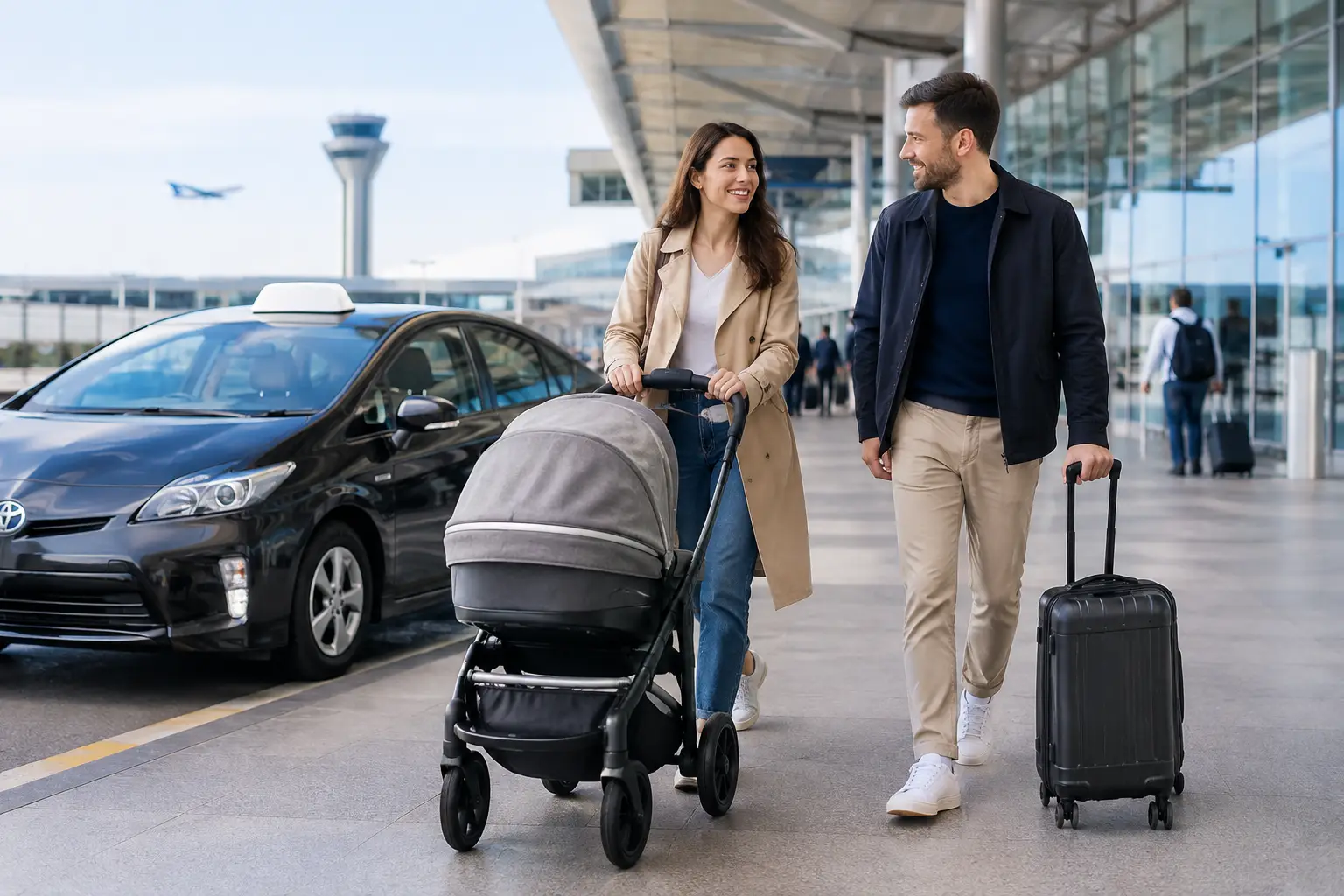
A pram, hand luggage, a car seat, a changing bag and a tired child can make the walk from the car to the terminal feel much longer than it is. The key to how to travel Heathrow with a pram is not trying to carry everything at once. Plan the handover points – your front door, the taxi, check-in, security and the aircraft door – so you always know who is holding the child and where the essentials are.
Heathrow is well set up for families, but it is a large airport and the details vary by terminal, airline and destination. Giving yourself extra time, choosing the right vehicle and keeping the pram useful until the latest possible point will make the day far easier.
Start with the journey to Heathrow
For many families, the most awkward part of the trip happens before they reach the airport. A pram often takes up most of a car boot, while a car seat, suitcases and holiday bags quickly fill the remaining space. If you are travelling from High Wycombe, Beaconsfield, Amersham or a nearby village, allow for school-run traffic and the time needed to load everyone safely.
A pre-booked airport taxi removes one major uncertainty. Tell the operator that you are travelling with a pram, how many cases you have and whether you need a child seat. That gives them the information needed to send a suitable vehicle rather than leaving you to make a small boot work at the kerbside.
Just Airports Taxi provides pre-booked Heathrow transfers with vehicles selected around the size of your family and luggage. A fixed journey price also helps when travelling with children, as you are not watching the fare rise while trying to settle a baby or find a missing toy.
If your child normally uses a car seat, decide before travel day whether you will bring your own or arrange one. Bringing your own can be the better choice when you will need it at your destination, but it adds another item to manage at the airport. Some parents use a lightweight travel pram and hire or borrow equipment once they arrive. There is no single right answer – it depends on your child’s age, the length of the holiday and the transport plans at the other end.
Choose the right pram for airport travel
A compact, foldable pram is usually easiest at Heathrow, especially if it can be folded with one hand. It needs to be practical rather than perfect. A larger pram with a good basket can still be worth taking if your child will sleep in it or if you have a long connection, but it will be less convenient at security and when boarding.
Before leaving home, practise folding it while your child is nearby and your hands are full. Remove detachable cup holders, toys and loose rain covers. They can get caught on baggage belts or left behind at the aircraft door. Put a name label and mobile number on the pram, and take a quick photo of it in case you need to describe it to airline staff.
Keep the changing bag separate from the pram. The pram may be taken away at the aircraft door, while the changing bag should stay with you. Pack nappies, wipes, a change of clothes, milk or snacks, medicines and one familiar comfort item where you can reach them without opening your main cabin bag.
Check your airline’s pram policy before packing
Most airlines allow parents to take a pushchair or pram for young children, often in addition to their normal baggage allowance. However, the rules on dimensions, weight, whether it can go to the aircraft door and whether a car seat is included differ between airlines.
Check the policy for your specific flight before you travel, including the return journey. Ask whether you need a baggage tag at check-in and whether the pram will be returned at the aircraft door or sent to the baggage reclaim belt. This small detail changes what you will need during the walk through the arrival airport.
If you are taking a two-piece travel system, check whether both parts are accepted. Some airlines prefer larger items to be checked at the desk, which means you may want a baby carrier for the terminal.
Arrive early, but make the extra time useful
Families should not aim to arrive at the last possible moment. Heathrow recommends that passengers follow their airline’s check-in guidance, and international flights can involve queues at bag drop, security and passport control. Add time for nappy changes, feeds and the occasional refusal to get back into the pram.
Aim to reach the terminal with enough time to move at your child’s pace, rather than rushing them through every stage. The practical benefit is not only avoiding a missed flight. A calmer parent is better able to notice a passport tucked into the wrong pocket or a comforter dropped beside the check-in desk.
At drop-off, have one adult focus on the child and pram while the other handles cases. When travelling alone, ask your driver to place luggage together on the pavement before you unfold the pram. Do not try to balance a baby, a suitcase and a folded pram while vehicles are moving around you.
How to travel Heathrow with a pram through check-in and security
At check-in or bag drop, tell the agent that you want to use the pram until boarding if your airline permits it. They can tag it appropriately and confirm the collection arrangements. Keep that tag visible and do not remove it when folding the pram later.
At security, you will normally need to take your child out of the pram. The pram itself will be screened, and staff may ask you to fold it or carry it through a separate screening point. Liquids for babies and young children can be allowed in reasonable quantities, but they may need additional checks. Keep them together in a clear, easy-to-reach section of your bag rather than buried below spare clothes.
This is one point where a baby carrier can be useful. It leaves both hands free while the pram goes through screening. For a toddler who will not be carried, explain the process simply before reaching the trays: shoes may come off, bags go on the belt, then the pram comes back. Familiar instructions can prevent a small delay becoming a difficult moment.
Once through security, rebuild your routine before walking away. Put the child back in the pram, secure the bags, check the passport pouch and take a breath. There is no prize for being first to the gate.
Use the terminal to your advantage
Heathrow terminals have accessible toilets and baby-changing facilities, but their exact locations vary. Find the nearest facilities soon after security rather than waiting until your child urgently needs them. If you have time, a nappy change and snack before boarding can make the first part of the flight much easier.
Keep an eye on the departure boards. Gates may be some distance away, and a pram makes that walk manageable, but you still need time to reach the gate before priority boarding closes. Many airlines offer early boarding for families with young children. It is helpful if you need time to install a child restraint or arrange bags, though some parents with active toddlers prefer to board later so their child can move around for longer. Choose the option that suits your family rather than assuming early boarding is always best.
At the gate, remove all personal items from the pram basket before handing it over. Keep your rain cover and any straps attached only if the airline confirms they can stay on. A protective travel bag can reduce scuffs for a valuable pram, but it is another item to carry and may not be practical for every trip.
Plan for the arrival, not only the departure
The return journey is often harder because everyone is more tired. Before flying home, confirm again where your pram will be returned. If it comes back at the aircraft door, you can use it immediately for the walk through the terminal. If it arrives at baggage reclaim, be prepared to carry or use a sling until then.
Arrange your Heathrow pickup for a realistic time after landing, not the minute the plane touches down. Passport control, baggage reclaim and walking to the collection point can take time, particularly with children. A flight-monitored airport transfer is useful here because the driver can respond to a delayed or early arrival while you concentrate on getting your family through the terminal.
Keep one warm layer and a snack accessible for the final stage. A child who slept on the flight may wake hungry, cold or upset just as you reach the arrivals hall. Having those basics ready is more valuable than an over-packed cabin bag.
Travelling through Heathrow with a pram does involve a few more moving parts, but it does not need to feel chaotic. Give yourself time, keep the essentials within reach, and arrange transport that has room for the whole family from the start. The right preparation lets you begin the holiday at the terminal door rather than after you finally reach the gate.