A vehicle can have enough seats and still be completely wrong for your bags. That is the problem many travellers discover too late, often with suitcases at their feet or a rushed search for a second car. Choosing the best vehicles for airport luggage starts with the cases, not the passenger count.
For a Heathrow transfer, allow for more than the luggage you packed. Cabin bags, handbags, laptops, pushchairs, golf clubs, ski equipment and duty-free purchases all need a safe place to go. The right vehicle gives everyone room to travel comfortably and lets the driver load the car properly before setting off.
Best vehicles for airport luggage and passenger numbers
There is no single best choice for every journey. A solo business traveller with one case needs something very different from a family of five heading away for two weeks. The useful question is: how many people are travelling, and how much space will every item genuinely take up?
Saloon cars for light luggage
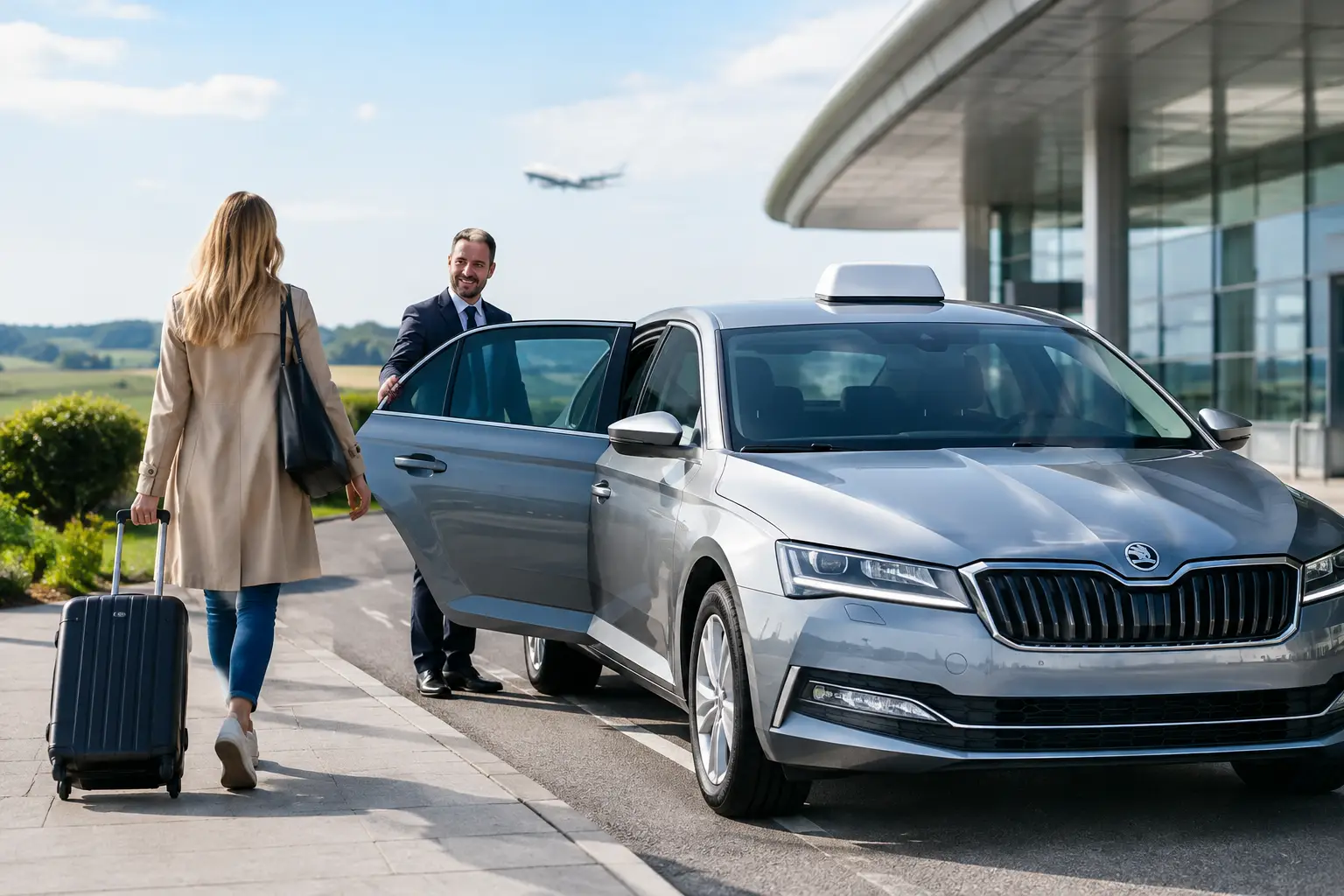
A saloon car is a sensible choice for one or two passengers travelling with standard luggage. It suits a couple with one medium or large suitcase each, plus small cabin bags, and it is often the most economical option for a straightforward airport run.
It may also work for a lone traveller carrying a larger case, work bag and hand luggage. However, a saloon boot has limits. Two adults with several oversized cases, or three passengers each bringing a full holiday suitcase, should not assume it will be comfortable. Booking a larger vehicle is usually better than trying to make a tight fit work on the day.
Estate cars for extra case space
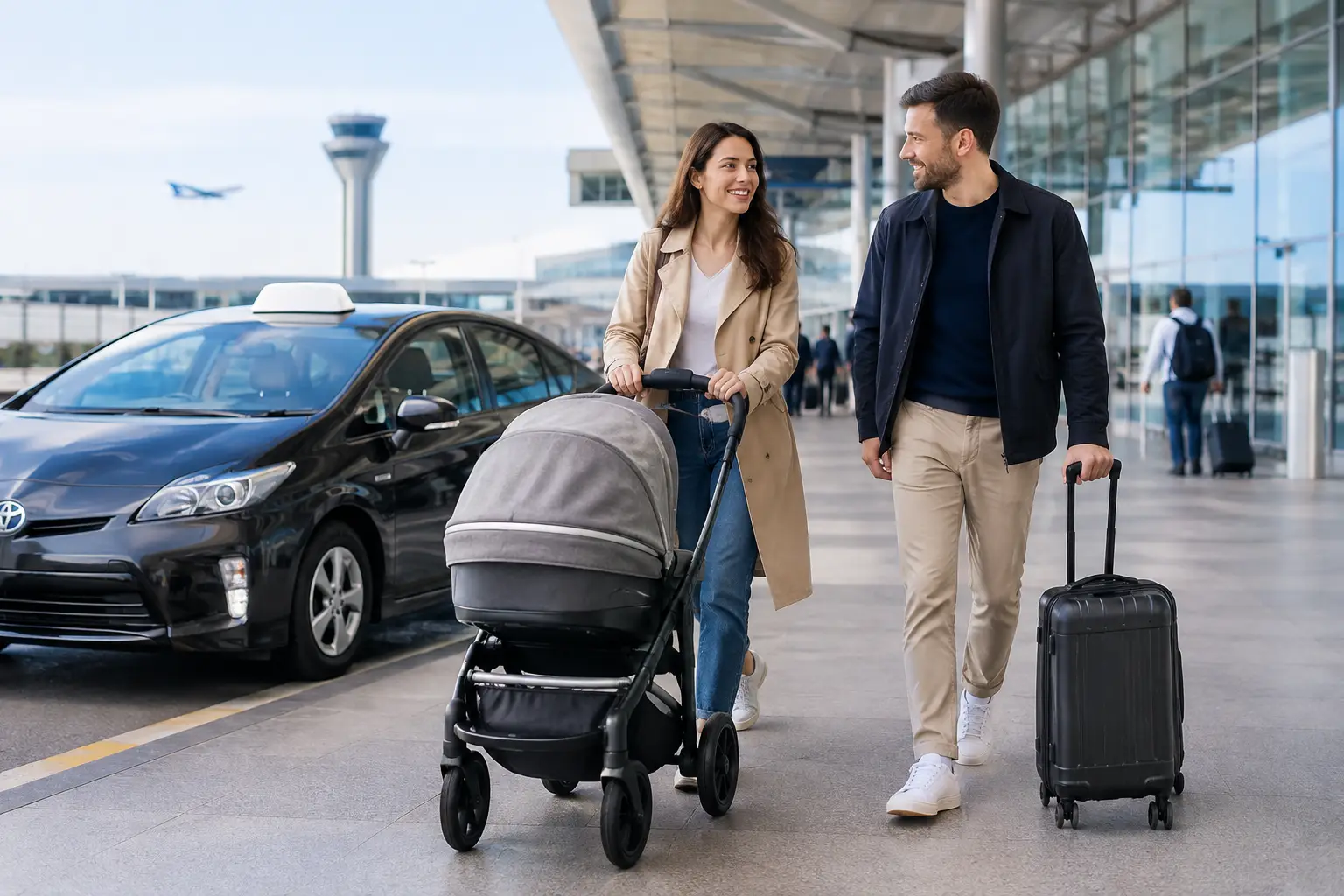
An estate car is often the practical middle ground when there are up to three passengers with substantial luggage. The extended rear storage area can accommodate more suitcases than a standard saloon, making it a strong option for couples travelling for longer holidays or small families with a pushchair.
Estates are particularly useful when the number of passengers is modest but the luggage is not. For example, two people taking long-haul cases, cabin bags and a garment bag may need more boot space than a saloon can provide. If you are travelling from villages around the Chilterns, where arranging a second vehicle at short notice is inconvenient, this extra capacity offers valuable reassurance.
MPVs for families and mixed luggage
An MPV is designed for flexibility. It can be a good fit for families, groups of three or four, and travellers carrying a mixture of larger cases, hand luggage and children’s equipment. The additional seating is useful, but the benefit is not only the seat count. A well-sized MPV offers a more practical layout for awkward items.
This is often the right choice for parents travelling with a buggy, car seat or travel cot. It is also worth considering for a group where one passenger has sports equipment or a particularly large suitcase. Tell the booking team about those items in advance so the vehicle can be matched properly.
Eight-seat minibuses for groups with bags
For larger families and small groups, an eight-seat minibus makes airport travel much easier to organise. Rather than splitting passengers across two cars, everyone can travel together, arrive together and keep track of the luggage in one place.
That said, eight seats do not automatically mean space for eight large suitcases. Luggage capacity depends on the minibus layout and the size of the bags. Six people with large holiday cases may need more room than eight people travelling light for a weekend. Give an honest luggage count when booking, including cabin cases, pushchairs and any bulky items.
Sixteen-seat minibuses for larger parties
A 16-seat minibus is the sensible option for sizeable family groups, wedding parties, work teams or groups travelling from the same area. It reduces the stress of coordinating multiple pickup times and helps make sure no one is left managing cases alone at Heathrow.
For groups at this size, clear information matters more than guessing. Confirm the passenger total, the number of large cases, smaller bags and any specialist items. A group with 14 people and hand luggage only has different requirements from 10 people with two cases each.
How to work out the right luggage capacity
Before booking, line up what you expect to take rather than estimating from memory. Most airport transfer problems happen because travellers count only checked suitcases and overlook everything else.
Think about the journey in three parts: checked luggage, cabin luggage and bulky items. A large hard-shell case takes considerably more space than a soft weekend bag. A pushchair may fold down, but it still needs to fit safely. Golf bags, musical instruments and folding wheelchairs should always be mentioned before the journey is confirmed.
It also helps to consider your return trip. You might travel out with room to spare, then return with gifts, shopping or additional items. If you are unsure between two vehicle sizes, the larger option is normally the more comfortable and reliable choice, particularly for an early departure when there is no time to rearrange transport.
Why seat count is not enough
A common mistake is to book based solely on the number of people. Four passengers might fit into a standard car, but four large cases may not. Equally, a minibus may have plenty of seats while its available luggage area is reduced when every seat is in use.
The best airport transfer vehicle balances passengers and baggage together. It should allow the driver to secure the luggage without blocking access, overfilling the passenger area or making the journey uncomfortable. Safety and comfort matter just as much as finding a vehicle that technically has space.
This is especially relevant for Heathrow journeys. Depending on the terminal and traffic conditions, you may spend a significant period in the vehicle. Having a case on someone’s lap or bags crowded around feet is not a good start or end to a trip.
Details to provide when booking
Accurate booking information helps your transfer run smoothly from your door to the terminal. Along with the pickup address, flight time and number of passengers, provide the number of large suitcases and cabin bags. Add notes about anything unusually shaped, heavy or difficult to carry.
If you are booking for other people, check their luggage plans rather than assuming everyone is travelling light. This is useful for group holidays, business travel and airport pickups after a long-haul flight. For arrivals, flight monitoring and a clear collection plan make the final part of the journey much less stressful, but the vehicle still needs enough room for all those bags.
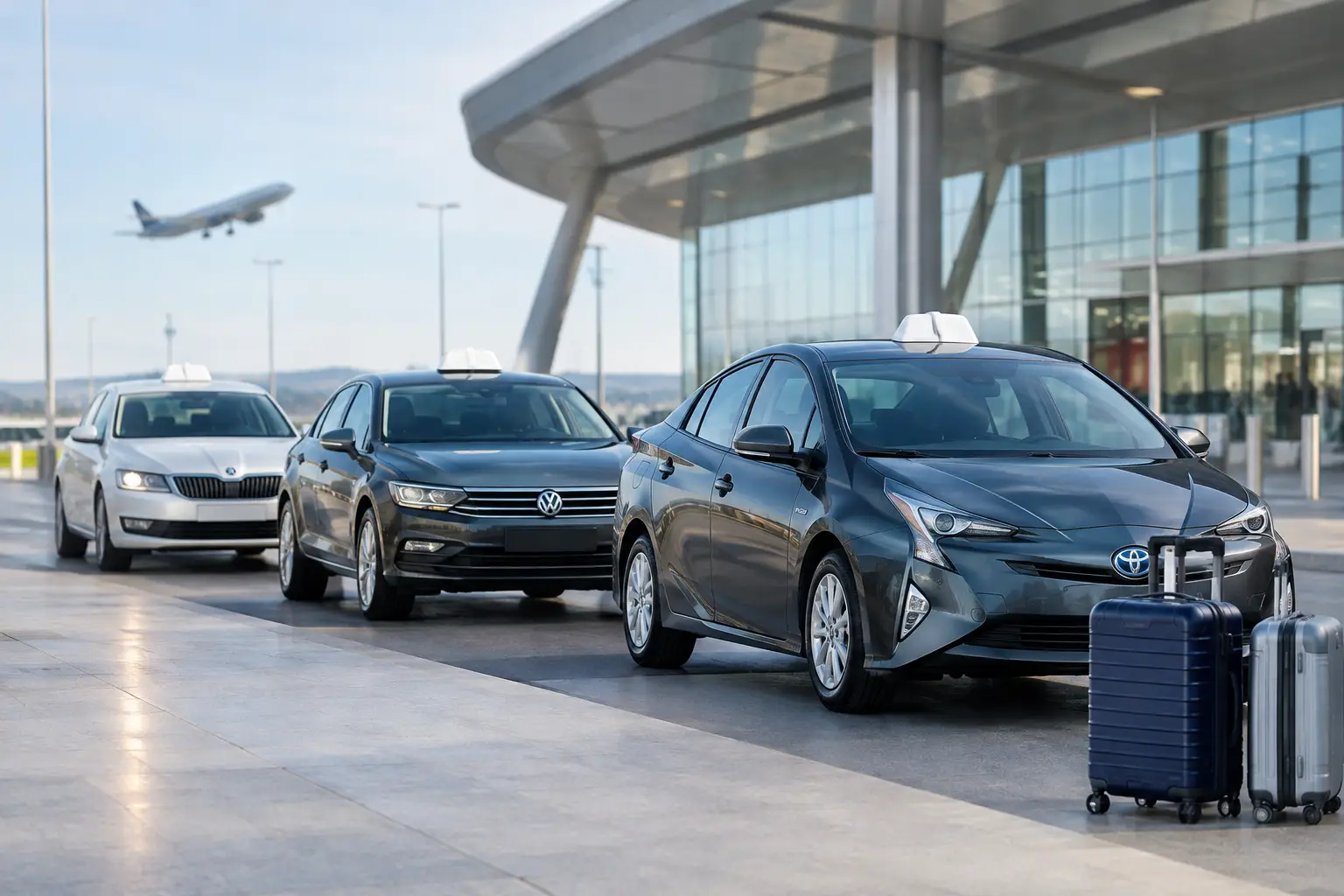
At Just Airports Taxi, vehicle options range from saloon cars to 16-seat minibuses, so the booking can be matched to the journey rather than forcing every customer into the same type of car. A short conversation before travel can prevent an awkward loading problem later.
When it is worth upgrading the vehicle
Upgrading is sensible when you have more luggage than usual, young children, mobility equipment or a long journey after landing. It can also be worthwhile when several adults are sharing a transfer and each has a full-sized case. The additional space is often a small price to pay for travelling without compromise.
Business travellers may prefer a larger vehicle when carrying samples, presentation materials or several pieces of equipment. Families should consider it when travelling with a pushchair and holiday luggage. For friends sharing a ride, a minibus can be better value and easier to manage than two separate cars, provided the luggage requirement is confirmed.
The right vehicle should feel planned, not improvised. Count the cases, mention the extras and choose enough space for everyone to start their Heathrow journey settled and ready, rather than hoping the boot will close.